
Products
BuTech Valves, Fittings and Tubing
haskel-logo.png

Reach Out To Us

Have questions or need more information?

How Pneumatic Gas Boosters Generate Pressure?


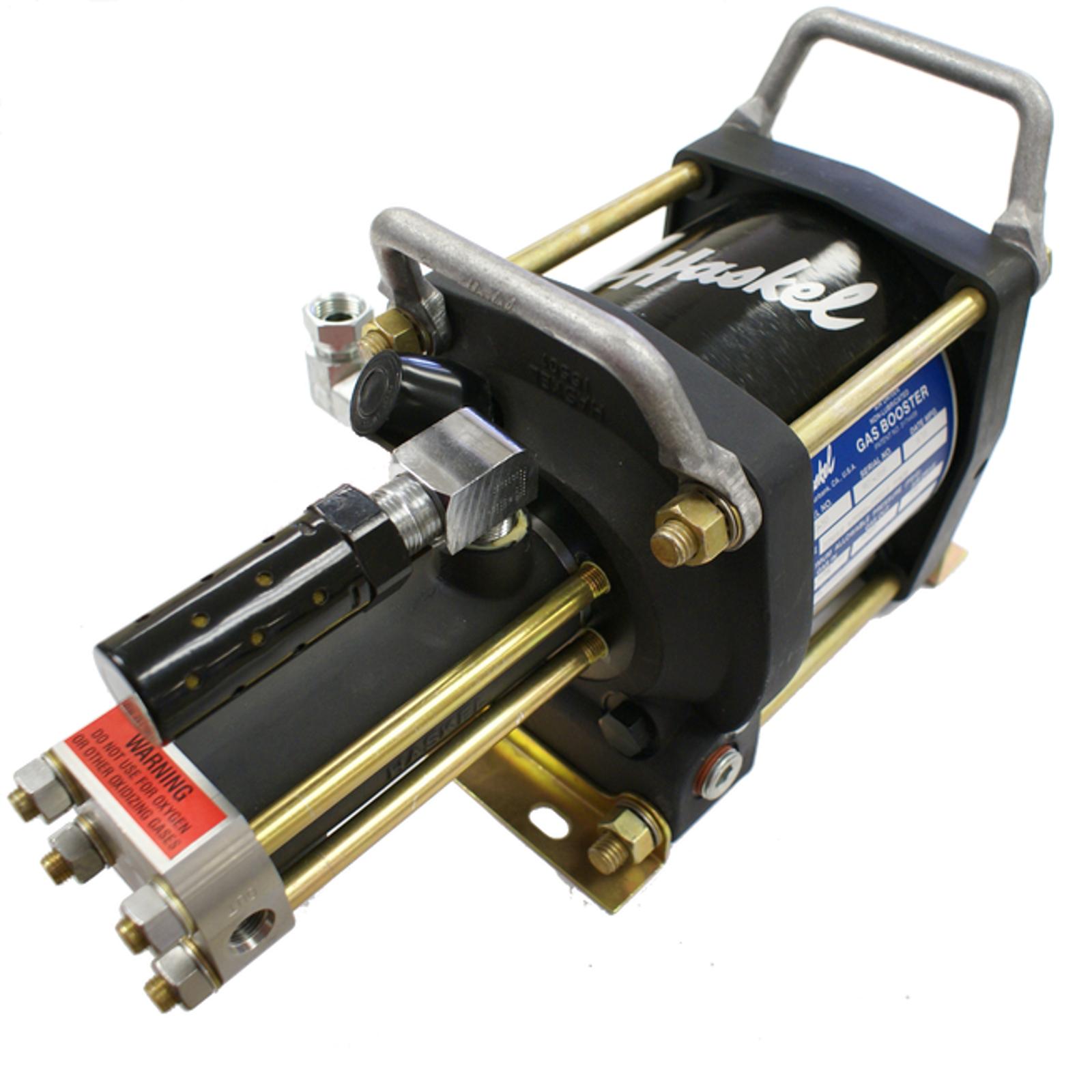
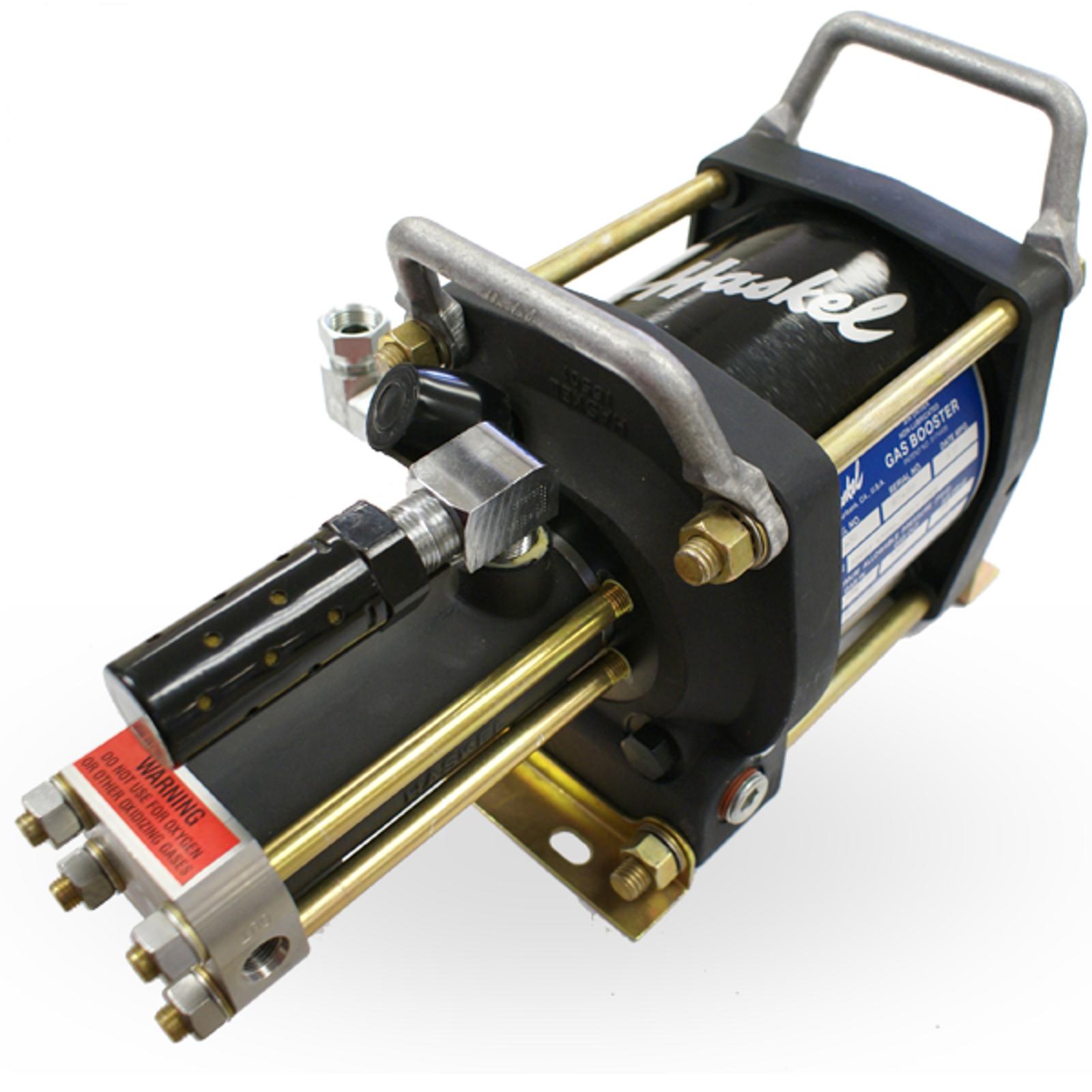
Pneumatic gas boosters use a large-area reciprocating air‑drive piston that is directly coupled to a smaller-area gas piston. When compressed air enters the drive section, it cycles a spool and pilot valve system, creating automatic reciprocation without needing external controls with complex electronics. This design allows for continuous cycling as long as air is supplied, with the ability to stall when downstream pressure is reached.

Isolation Between Air and Gas Sections. Built‑In Cooling Effect via Exhaust Air

The booster contains three sets of dynamic seals separating the air drive from the gas chambers.
Two intermediate chambers are vented to atmosphere, which prevents air contamination in the gas stream — a key advantage when handling high‑purity or oxygen‑compatible gases. The cold exhaust air from the drive section is routed through integrated cooling jackets surrounding the gas barrels, which helps manage the temperature increases caused by gas compression. This cooling supports better gas purity, efficiency and seal life.


Pneumatic gas boosters can achieve outlet pressures up to 39,000 psi (2,690 bar), depending on the model and pressure ratio. Maximum outlet pressure is calculated as the air‑drive pressure multiplied by the nominal booster ratio.
quality

Specifications & Applications

Discover Our Portfolio of Pneumatic‑Driven Gas Boosters

AG-50-gas-booster.png

AG Series Single Acting, Single Stage

Single acting, single stage boosters are the smallest and lightest with pressures to 39,000 psi.  

ag-50-gas-booster-1.png

AGD Series Double Acting, Single Stage

Haskel AGD Series double‑acting, single‑stage gas boosters deliver efficient, air‑driven, oil‑free compression up to 35,000 psi for industrial gases.

ag-50-gas-booster-1.png

AGD Series Double Acting, Single Stage

Haskel AGD Series double‑acting, single‑stage gas boosters deliver efficient, air‑driven, oil‑free compression up to 35,000 psi for industrial gases.

ag-50-gas-booster-1.png

AGT Series Two Stage

Haskel AGT Series Two-Stage air-driven gas boosters are designed for high-compression ratios, offering outlet pressures up to 15,000 psi (1,034 bar).
AG-50-gas-booster.png

AGT Series Two Stage 8' and 14'

Haskel 8-inch or 14-inch AGT Series two-stage gas boosters are air-driven, high-compression units designed to boost gases (including Nitrogen, Helium, Hydrogen, and CNG) to pressures up to 9,000 psi or higher.
gas boosters banner pneumatic

Advanced Gas Booster Configuration

Enter your requirements and let our advanced tool recommend the best gas booster for your application

Hydrogen

Hydrogen gas boosters modified specifically for hydrogen service include special gas seals that are designed specifically to Haskel hydrogen gas boosters are built for enduring performance in hydrogen environments. We incorporate specialized gas seals rigorously tested for long-term service life with hydrogen. Captured vent ports allow for convenient connection to a safe venting system, further enhancing operational safety. Our commitment to safety extends to a comprehensive preventive maintenance program that ensures all components continue to function optimally year after year, mitigating any potential for embrittlement. Haskel’s hydrogen boosters are rated to pressures up to 15,000 psig/1034 bar.

Hydrogen gas boosters automatically adjust cycle speed as pressure increases. The booster runs at maximum speed during low‑pressure conditions and slows progressively as outlet pressure builds, reducing sudden pressure spikes and helping to manage compression heat during hydrogen boosting.
image hydrogen haskel

Oxygen

Oxygen Gas Boosters are Oxygen cleaned for high-purity to meet MIL SPEC 1330 D, in Class 100 (ISO 9001/AS9100 Certified Class 5) clean rooms where components are oxygen precision cleaned, and a Class 1,000 (Class 6) room where cleaned components are assembled. Oxygen Gas boosters are rated to pressures up to 5000 psig/345bar.

Oxygen gas boosters are specifically engineered to prevent ignition risks associated with high‑pressure oxygen handling. The design eliminates hydrocarbon contamination paths by fully separating the air drive section from the oxygen compression chambers using multiple dynamic seals with vented intermediate cavities. This prevents lubricants, particles, or compressed air from entering the oxygen stream.Maintenance of oxygen gas boosters follows stricter procedures than standard gas boosters. Any servicing of the gas section requires re‑cleaning of affected components before reassembly. Replacement parts must be oxygen‑compatible and handled in controlled conditions to maintain cleanliness standards.
Oxygen Image

Frequently Asked Questions

Double‑acting configurations improve efficiency, while higher ratios and two‑stage designs increase air demand.

Banner Haskel

How Can We Help You?

Partner with our experts to find the right high‑pressure solution for your application