Products
BuTech Valves, Fittings and Tubing
haskel-logo.png

Reach Out To Us

Have questions or need more information?

What is a Gas Booster?


A gas booster is a device that increases the pressure of industrial gases to a higher, controlled level. It safely boosts or transfers gases such as nitrogen, helium, hydrogen, oxygen, CO₂, and other specialty gases to pressures up to 39,000 psi (2,690 bar). Gas boosters help recover remaining gas from cylinders, achieve required test or charging pressures, and deliver clean high‑pressure gas without heat, spark or contamination.

Industry‑Leading Gas Booster Technology

Haskel designs and manufactures gas boosters that are the industry benchmark for durability, safety and reliability. Used for virtually all industrial gases and ideal for gas pressure increases, high pressure gas transference, cylinder charging, and scavenging, Haskel gas boosters can produce pressures up to 39,000 psi (2690 bar).

Gas boosters facilitate the construction of test systems and custom-built OEM products typically used to pressurize with gases that include argon, nitrogen, oxygen, hydrogen, helium, carbon dioxide, liquefied gas and many other specialty gases. 

Proven to be safe, robust, reliable, compact, and easy to maintain, Haskel gas boosters provide a number of operational benefits and gas boosters make fiscal sense for those who purchase gas in high pressure cylinders, send cylinders back to the supplier still containing valuable gas, or have a process requiring a continuous flow that can only be obtained by cascading multiple cylinders of gas.

Haskel AG Series Gas Booster

Discover Our Gas Boosters

Banner Gas Boosters

Advanced Gas Booster Configuration

Enter your requirements and let our advanced tool recommend the best gas booster for your application

H-Drive Hydraulic Gas Boosters. Built for High‑Capacity, High‑Flow Applications

Hydraulic‑driven boosters are designed specifically for applications where flow requirements exceed the capability of pneumatic models, including high‑volume gas transfer, large receiver charging, and hydrogen storage systems. They are engineered to safely handle continuous, heavy‑duty cycles with high stability. The H‑Drive architecture uses modular gas sections that can be removed, serviced, or replaced independently. This reduces downtime and enables operators to switch gas sections based on pressure or flow needs without redesigning the entire system.

The gas section features a unique self‑lubricating sealing package that delivers spring‑loaded, non‑contaminating compression. This allows:

  • zero oil carryover
  • extended seal life
  • compatibility with ultra‑pure gases (e.g., semiconductor‑grade helium, hydrogen)
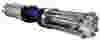
H-Drive booster

Pneumatic‑Driven Gas Boosters

Reliable, compact boosters using compressed air to safely deliver high‑pressure gas transfer, cylinder charging, and testing applications. Suitable for most industrial gases with pressures up to 39,000 psi (2,690 bar).


How Pneumatic Gas Boosters Actually Generate Pressure?


Pneumatic gas boosters use a large-area reciprocating air‑drive piston that is directly coupled to a smaller-area gas piston. When compressed air enters the drive section, it cycles a spool and pilot valve system, creating automatic reciprocation without needing external controls with complex electronics. This design allows for continuous cycling as long as air is supplied, with the ability to stall when downstream pressure is reached. The booster contains three sets of dynamic seals separating the air drive from the gas chambers. Two intermediate chambers are vented to atmosphere, which prevents air contamination in the gas stream — a key advantage when handling high‑purity or oxygen‑compatible gases.

Electric‑Driven Gas Boosters (Q‑Drive)

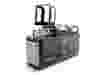
Smart electric servo-driven gas compression systems delivering automated, efficient, clean and quiet operation with 95% power efficiency and full remote monitoring. Designed for high flows, precise control, and minimal maintenance. The Q‑Drive system is built as a self‑contained cabinet that houses the electric actuator, gas sections, cooling circuits, electrical cabinet, HMI touchscreen, PLC controls, and sensors. This makes installation simpler and creates a compact, plug‑and‑operate system.

Intelligent Pressure Management with Automatic Self‑Regulation

The system self‑adjusts cycle speed dynamically based on internal sensor readings.

  • smooth landing at final pressure
  • extended seal life
  • reduced heat
  • zero overshoot
The system self‑adjusts cycle speed dynamically based on internal sensor readings.
Haskel electric driven Q-Drive gas booster

Why Use a Haskel Gas Booster

Haskel pneumatic and hydraulic driven gas boosters offer a flexible and efficient source for delivering high pressure gases.

  • Oxygen or High Purity Cleaning: Haskel boosters are noted for their cleanliness and can handle pure gases such as oxygen without risk of any contamination.
  • Multi-Staging Capability: For higher flow rates and pressures, beyond the capability of a single gas booster, one or more boosters of the same ratio may be plumbed in parallel and then in series with one or more boosters of the same ratio.
  • High Flow Rates at High Pressures: When high flow rates at high pressures are needed, the booster can charge a receiver to an even higher pressure level, thus storing a volume of gas available for rapid release at a constant pressure through a pressure reducing valve.
  • Cost Savings: Most industrial gases are commonly delivered at pressures of 2,000 - 2,600 psi in steel cylinders. If the gas is to be used well below the supply pressure, the pressurized supply is easily piped and controlled to the point of use with simple valving.

Frequently Asked Questions

Haskel boosters can compress most industrial gases, including nitrogen, helium, argon, CO₂, air, and many specialty gases.
Pneumatic and hydraulic boosters can also compress oxygen (with proper oxygen cleaning) and hydrogen (with gas‑specific certified models and appropriate materials).

Banner Haskel

How Can We Help You?

Partner with our experts to find the right high‑pressure solution