
- Drive is a low-friction, slow-speed-cycling air cylinder, designed for continuous duty without airline lubrication. Vented distance pieces insure hydrocarbon-free gas section operation. High- pressure oxygen seals compensate for wear, are immune to sudden failure and operate completely non-lube, oil free.
- Cold air (as low as -20° F) is a natural by- product from the air-powered drive exhaust. This frigid exhaust air is channeled through a system of cooling jackets and an interstage cooler, resulting in high-pressure cylinder temperatures well below the limits needed for the long life of critical parts.
- Inlet gas supply pressure acts directly through the opposed-piston construction to assist the air drive during the compression stroke, conserving power required by the drive directly in proportion to the gas supply pressure.
MODEL 26968
FOR LIFE SUPPORT DEPEND ON HASKEL OXYGEN BOOSTERS
Filling aircraft on-board oxygen cylinders for commercial, military and private fleets. Transferring oxygen into various high-pressure receivers for deep ocean diving support, commercial or military. These are just two examples of the uses for Model 26968 oxygen boosters that have provided cost savings and increased safety for many years.
The 26968 gas booster system will boost oxygen from high- or medium-pressure sources and will also function effectively to collect and transfer the gas from partially depleted supply cylinders to “top off” other cylinders to maximum pressure.
Conventional industrial, shipboard or contractor-type compressed air sources are normally used for power. All motive power and controls are completely pneumatic with no electrical connections required.
A pneumatic control system constantly monitors cylinder inlet pressure and tank outlet pressure, automatically shutting down the booster when the desired outlet pressure or minimum inlet pressure is reached, enabling unattended operation.
- Booster: Air-driven, balanced-opposed piston-type, two stage
- High-pressure oxygen chambers: Non-lube hydrocarbon-free, triple sealed and vented from the drive air chest
- High-pressure tubing & fittings: Stainless steel, 5,000 psi maximum oxygen working pressure
- Particle filters - Inlet and outlet gas: 5 microns.
- Gauges: Stainless steel tube, solid front 4-1⁄2” dial size
- Port sizes: Inlet and outlet gas: “_ NPT female; Air Drive; _NPT female”
- Control range adjustment: Inlet minimum: 150 to 850 psi cutout Outlet maximum: 800 to 5,000 psi cutout Safety relief (outlet): 800 to 5,000 psi
- Cooling: With air exhaust to both stages and intercooler
- Noise: 80 dB range pulses, depending on working pressure (measured at 30 inches from booster)
- Maintenance: Simple seal kit replacement
- Installation: No special foundation, no tie-down required and no electrical connections
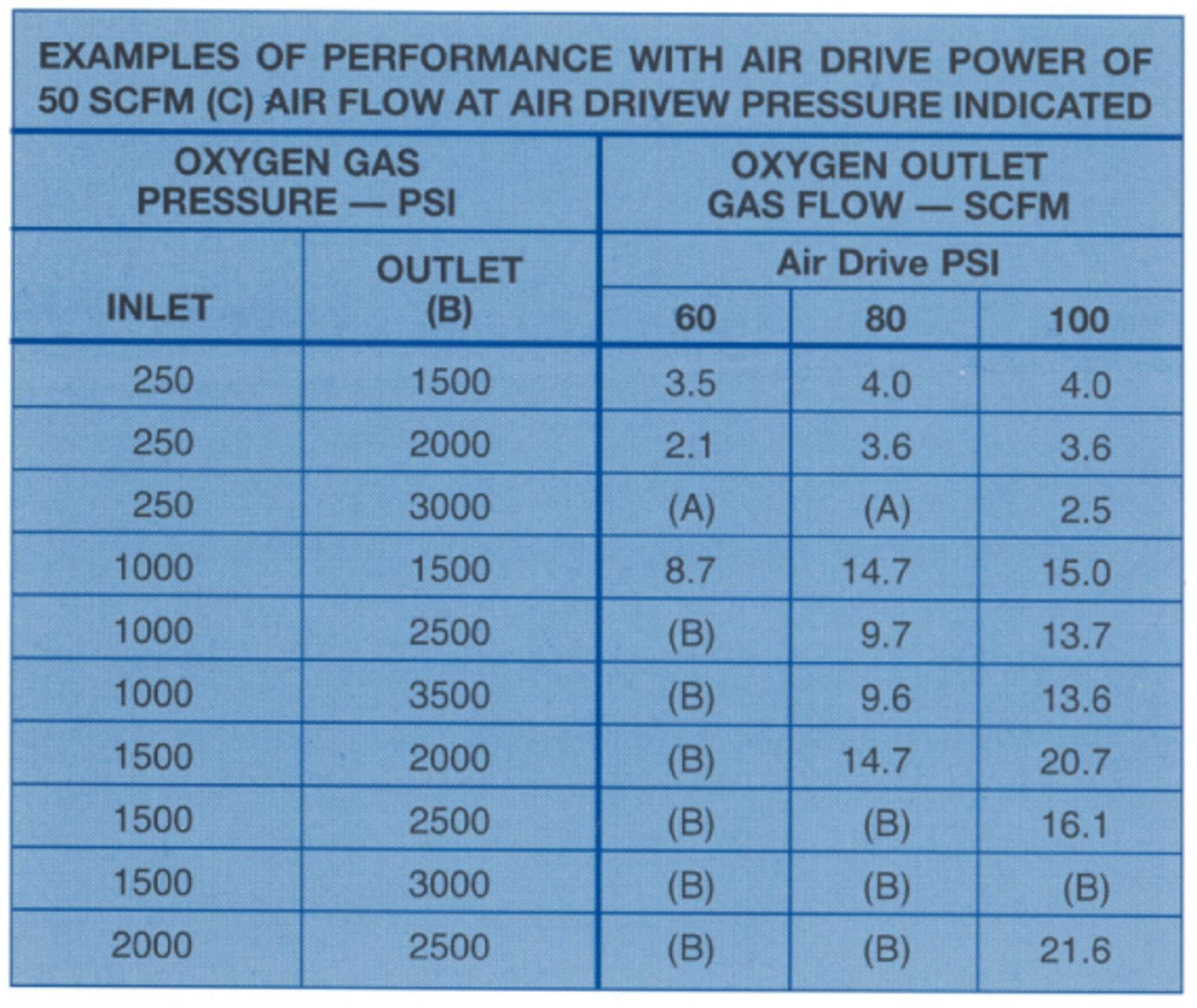
- Outlet stall (maximum gas outlet pressure is: air drive psi x 30 plus 2 x gas inlet psi)
- Interstage stall (maximum gas inlet pressure is: air drive psi x 15 if outlet pressure exceeds air drive psi x 30. If it does not, maximum gas inlet pressure is air drive psi x 30)
- If less air flow is available, outlet gas rates will decrease approximately in proportion

Reach Out To Us
Have questions or need more information?