
What Causes Oxygen System Fires?
Understanding the Hidden Risks in High-Pressure Oxygen Systems
When engineers think about fire hazards, they often think about sparks, open flames, or electrical faults. However, in oxygen-service environments, some of the most significant risks can come from sources that are virtually invisible.
A microscopic particle. A trace amount of oil. A rapidly opened valve.
In high-pressure oxygen systems, these seemingly minor issues can create the conditions necessary for ignition. Understanding what causes oxygen system fires is essential for anyone responsible for aerospace, defense, naval, industrial gas, semiconductor, medical, or research applications.
While oxygen itself is not flammable, it dramatically accelerates combustion. When fuel, oxygen, and an ignition source come together, fires can ignite quickly and burn with extreme intensity. This is why oxygen cleaning, contamination control, and proper system design play such important roles in oxygen-service safety.
The Fire Triangle in Oxygen Systems
Oxygen systems present unique challenges because all three elements required for combustion can be present simultaneously:
- Oxygen, often at elevated concentration or pressure
- Fuel, in the form of contaminants or combustible materials
- An ignition source, such as particle impact, friction, or compression heating
Reducing contamination is one of the most effective ways to remove a potential fuel source and lower overall ignition risk.
Why Oxygen Systems Require Special Consideration?
In normal atmospheric conditions, many materials burn relatively slowly or may not ignite at all. In oxygen-enriched environments, however, combustion behavior changes significantly.
Materials that remain stable under conventional operating conditions can become readily combustible when exposed to elevated oxygen concentrations and pressures. Even small amounts of foreign material, residue, or particulate matter can increase the likelihood of ignition, particularly in high-pressure systems where energy is introduced through compression, flow, friction, or mechanical operation.
For this reason, organizations operating critical oxygen systems place significant emphasis on oxygen cleaning, and proper operating procedures before equipment enters service.
The Most Common Causes of Oxygen System Fires
Hydrocarbon Contamination
One of the leading causes of oxygen-system fires is the presence of hydrocarbons such as oils, greases, lubricants, solvents, and manufacturing residues.
These materials can act as fuel within an oxygen-rich environment. Although a component may appear clean to the naked eye, even trace levels of contamination can create ignition hazards under high-pressure conditions.
Hydrocarbon contamination is particularly concerning because it can be introduced at multiple stages throughout a product's lifecycle, including manufacturing, maintenance, assembly, transportation, and handling. This is why oxygen cleaning processes are designed to remove these materials before equipment enters oxygen service.
In many high-pressure applications, preventing the introduction of foreign materials and residues is far more effective than dealing with the consequences of an ignition event after it occurs.
Hydrocarbons are not the only contaminants of concern. Fibres, dust, lint, metal particles, weld slag, cleaning-agent residues, and manufacturing debris can also contribute to oxygen-system hazards. While these contaminants may appear insignificant, high-pressure oxygen environments can dramatically increase their potential to participate in ignition events.
Particle Impact Ignition
Not all ignition sources involve heat generated from external sources.
In high-pressure oxygen systems, small particles travelling at high velocity can impact internal surfaces with enough force to generate localized heating and ignition. Even microscopic contaminants can become problematic when moving through oxygen systems at high speeds.
Common sources include metal shavings, dust, fibers, corrosion products, and debris introduced during manufacturing or maintenance activities.
This is one reason why system cleanliness is so important. Removing particulate contamination helps reduce one of the most common and least understood causes of oxygen-system ignition.
Particulate matter is one of the most critical factors evaluated during oxygen cleanliness verification. Due to the high velocities that particles can reach within pressurised systems, particulate analysis is often performed as an additional safeguard to help minimise ignition risks and support oxygen-service readiness.
Adiabatic Compression
Adiabatic compression occurs when oxygen is rapidly pressurized, causing a sudden increase in temperature.
This often happens when valves are opened too quickly or when gas enters a system under high pressure. The resulting temperature spike can be significant enough to ignite contaminants or combustible materials within the system.
In many oxygen-system investigations, rapid pressurization has been identified as a contributing factor to ignition events. Proper operating procedures and system design are therefore critical to managing these risks.
The faster the pressure change, the greater the potential for temperature generation and ignition.
Mechanical Friction
Moving components generate friction.
Under normal circumstances, this is rarely a significant concern. However, within an oxygen-enriched environment, friction can create sufficient heat to become an ignition source if combustible contaminants are present.
Valves, regulators, seals, and other moving components must therefore be carefully designed, manufactured, and maintained for oxygen service. Maintaining cleanliness throughout the system helps reduce the likelihood of friction-related ignition events.
Compression Heating
Closely related to adiabatic compression, compression heating occurs whenever gas is compressed within a confined space.
As pressure increases, temperature rises. If foreign materials or residues are present within the system, these elevated temperatures can increase the risk of ignition.
This is particularly important in high-pressure oxygen boosters, compressors, filling systems, and gas distribution applications where pressure changes are a normal part of operation.
Why Contamination Control Is Critical?
A common misconception is that oxygen-system fires are primarily caused by equipment failure.
Contamination is frequently a contributing factor.
A well-designed oxygen system can still be vulnerable if contaminants are introduced during manufacturing, maintenance, assembly, or operation. Conversely, a robust contamination-control strategy can significantly reduce risk before a system is ever commissioned.
Maintaining cleanliness requires attention at every stage of the process, from initial component manufacturing through final assembly and installation.
This is why many organizations adopt oxygen-service cleaning practices and cleanliness requirements based on recognized industry and military standards.
Oxygen Cleaning Is Only the Beginning
One of the most important lessons learned from oxygen-service best practices is that successful oxygen cleaning does not automatically guarantee oxygen cleanliness.
Following cleaning, components must be protected from recontamination during inspection, assembly, testing, drying, packaging, storage, and transportation. Without these controls, contaminants can be reintroduced before equipment is commissioned, potentially undermining the benefits of the original cleaning process.
The Role of Oxygen Cleaning
Oxygen cleaning helps remove contaminants that could contribute to ignition in oxygen-service environments.
The process is designed to eliminate oils, greases, manufacturing residues, particulate matter, and other contaminants that may compromise system safety or performance.
However, cleaning alone is not always enough.
Components can become re-contaminated during handling, transportation, or assembly. This is why leading organizations often combine oxygen cleaning with documented contamination-control procedures, inspection protocols, and controlled assembly environments.
For critical applications, maintaining cleanliness after cleaning is every bit as important as achieving cleanliness in the first place.
Why Cleanroom Assembly Matters?
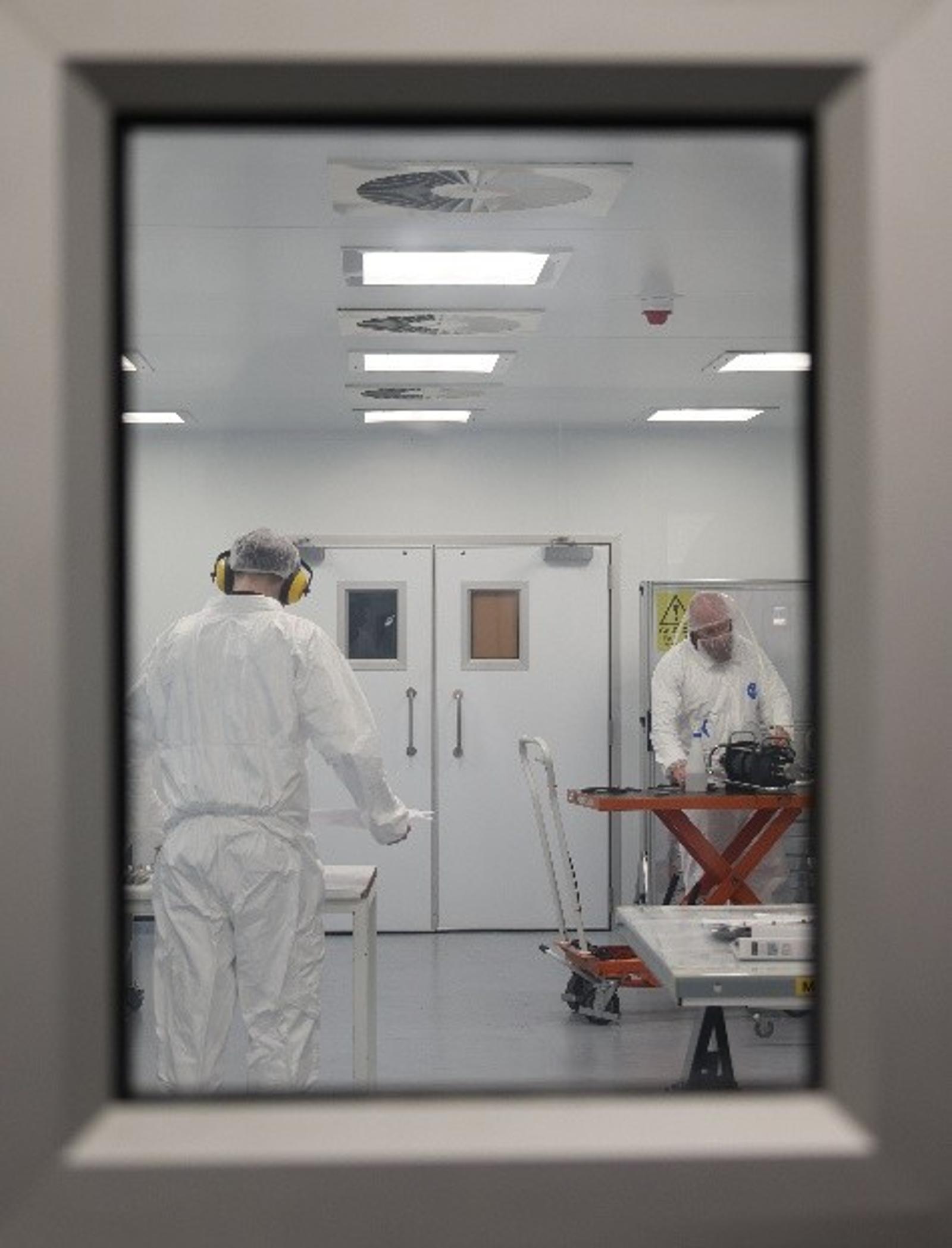
Many suppliers can clean individual components. Far fewer can maintain system cleanliness through cleaning, assembly, inspection, testing, and validation within controlled cleanroom environments.
For demanding oxygen-service applications, cleanroom assembly helps minimize opportunities for particles, residues, and other unwanted materials to be introduced before equipment enters service. By controlling the environment in which systems are assembled and validated, organizations can better protect the integrity of cleaned components and maintain system-level cleanliness.
This integrated approach is increasingly important across aerospace, defense, semiconductor, and industrial gas applications, where cleanliness requirements continue to become more stringent.
Cleanrooms provide more than general housekeeping benefits. They help control airborne particles during critical activities such as assembly, drying, inspection, packaging, and validation. This additional layer of environmental and process control plays an important role in preserving oxygen-system cleanliness after components have been cleaned.
Packaging and Handling Are Often Overlooked Risks
Even properly cleaned components can become contaminated if they are improperly handled or packaged. Oxygen-service best practices often include controlled packaging methods intended to preserve cleanliness during storage and transport. This helps ensure equipment arrives in the same condition in which it was certified and inspected.
Reducing Oxygen-System Fire Risk
While oxygen systems will always require careful management, many ignition risks can be significantly reduced through a combination of proper system design, cleanliness management, oxygen-compatible materials, and disciplined operating procedures.
Organizations that prioritize:
- Oxygen cleaning
- Contamination control throughout the equipment lifecycle
- Cleanroom assembly
- Proper handling and packaging
- Inspection and validation
- Controlled pressurization practices
are often better positioned to reduce ignition risks, support oxygen-service readiness, and improve long-term system reliability.
Reach Out To Us