

Products
Liquid Pumps
Refrigerant Pumps
Gas Boosters
Air Pressure Amplifiers
Haskel Systems
BuTech Valves, Fittings and Tubing
Haskel Valves
Industries & Applications
Aerospace and Defense
Automotive
Fluid Power
Oil and Gas
General Industry
Clean Energy: Hydrogen, Nuclear & Thermal Management
Services
Recommend Service Center in EMEA & Americas
ONSITE Service Program
Service & Technical Support
Spare Parts
Warranty Information
Oxygen Cleaning for High Pressure Systems
About Us
Document Library
Who We Are
News
Careers

A block and bleed valve isolates an instrument or line from process pressure (the block) and then vents the trapped pressure (the bleed). 

This lets technicians do maintenance, calibration or sampling safely. BuTech makes single block and bleed (SBB) and double block and bleed (DBB) needle valve assemblies for critical instrumentation in oil & gas, hydrogen and high-pressure industrial systems.

The range is built on six standardized valve styles. The goal is simple: easier configuration, shorter lead times and consistent ordering worldwide, with enough flexibility to fit very different system designs.

Six Standardized Block & Bleed Valve Styles

Single Block & Bleed Valves: One block valve and one bleed valve in a single body, for basic isolation, sampling and pressure verification.

Needle–Needle Valves: Needle valves for both isolation and venting, giving tight shut-off and controlled bleed-down.

Inline & Compact Single-Entry Valves: A space-saving design for crowded panels and tight installations.

Double Block & Bleed Valves: Two isolation barriers with a bleed valve between them, for redundant protection at critical points.

Ball–Needle Valves: Quarter-turn ball valve isolation combined with needle valve control for venting.

Multi-Instrument Manifolds: Isolation and venting for several instruments from one compact assembly.
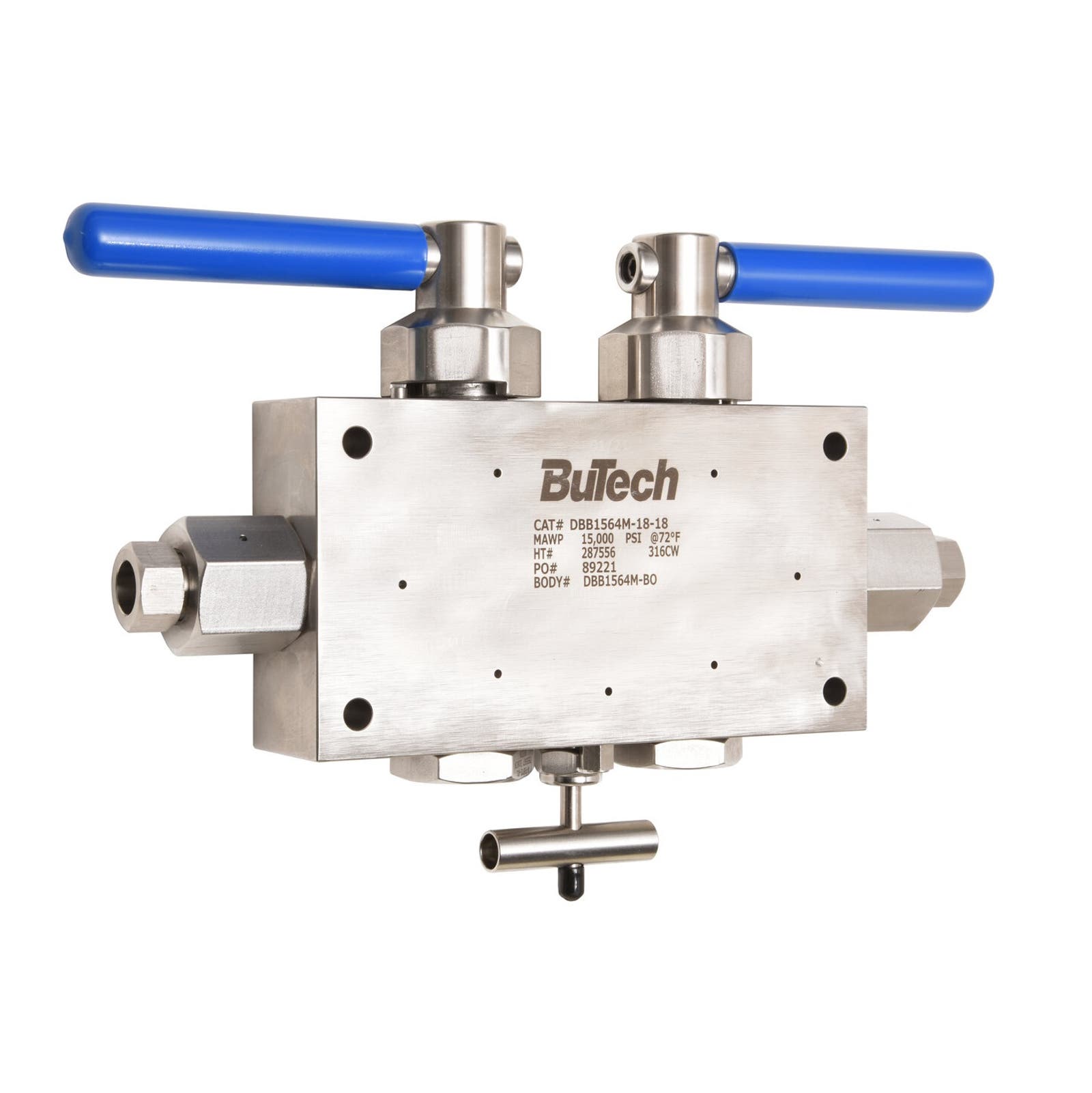
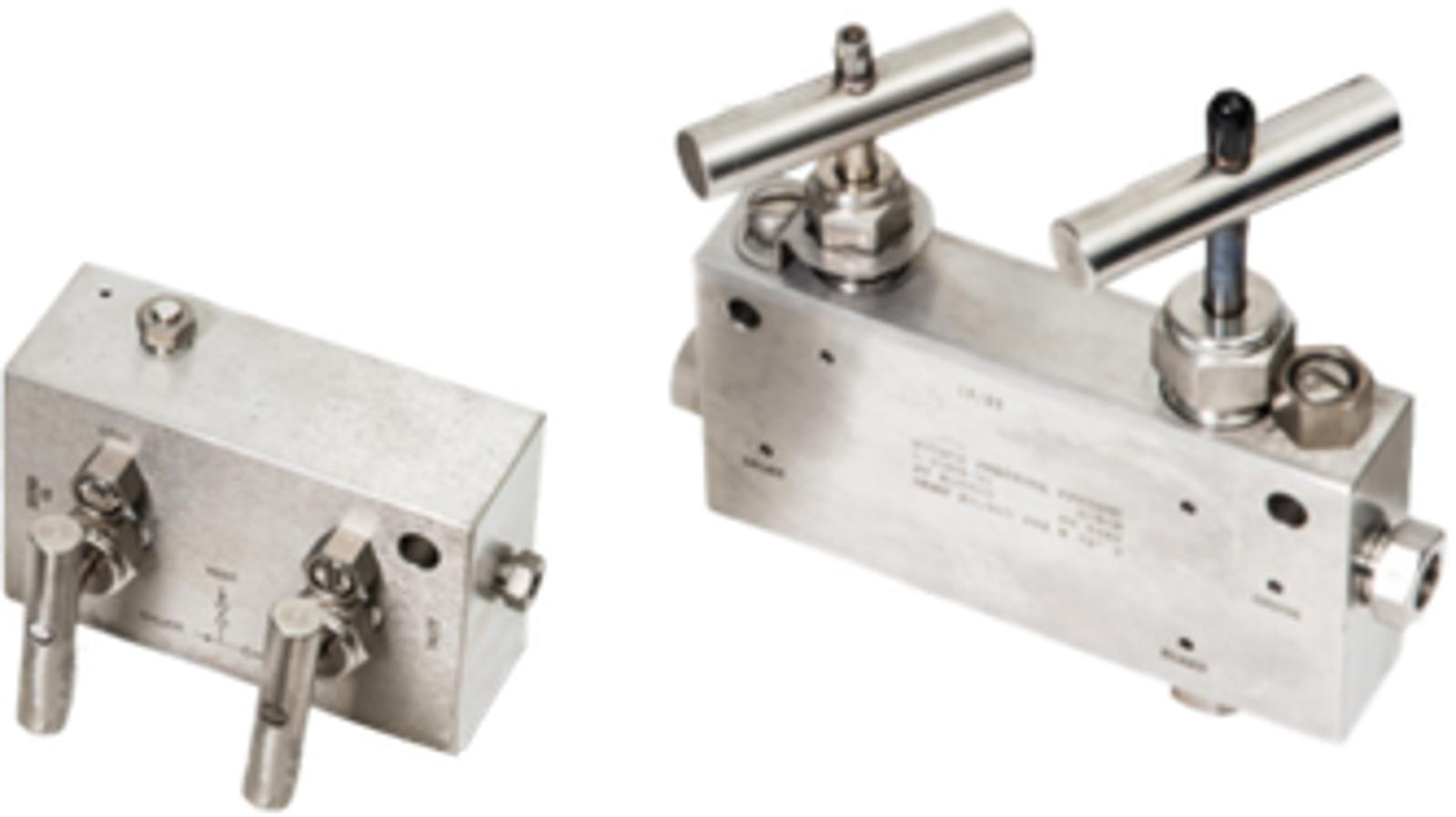
SBB or DBB: Which One Do You Need?

Choose a single block and bleed valve for routine instrument isolation, gauge service, sampling and pressure checks. 

Choose a double block and bleed valve when a single seal isn't enough, such as with hazardous fluids, high-pressure gases or any point where a leak past the block valve would put people or equipment at risk. The second barrier gives you redundant isolation, and the bleed between the two seals confirms that isolation is holding before anyone breaks a connection.

Why Use One Assembly Instead of Separate Valves?

When you replace separate valves, tubing and fittings with one block and bleed assembly, the installation improves in five ways:

  • Fewer leak points, because there are fewer threaded and fitted connections
  • Lower fugitive emissions, since every connection you remove is one less leak path
  • A smaller footprint, thanks to a compact design that frees up panel space
  • Faster installation, with fewer parts to fit, align and test
  • Less vibration stress, because a compact assembly carries less weight on the connections
Haskel banner backgroung image

Key Features

  • High-pressure designs for severe service
  • Redundant DBB isolation for critical applications
  • Precision needle valve control for stable flow and controlled venting
  • 316/316L stainless steel, with specialty alloys available
  • NPT, MP/HP cone-and-thread and compression fitting connections
  • Hydrogen-compatible configurations available<

Applications

BuTech block and bleed valves are built for the small, high-pressure lines that measure, sample, test and dose a process.
At these points, technicians have to isolate the line, vent it and confirm it's at zero pressure before they touch a connection.

Industries served: oil & gas, hydrogen, petrochemical and chemical processing, power generation, research laboratories, aerospace and defense, industrial manufacturing and shipbuilding.

FAQ

A DBB valve combines two isolation valves with a bleed valve between them. Operators can vent the pressure trapped between the two seals and confirm isolation before starting work.

Haskel banner backgroung image
BuTech specialists are available to guide you in selecting the optimal DBB or SBB configuration for your high-pressure system. For engineering support, detailed specifications, or a formal quotation.